Taiwanese Beef Noodles with a Sichuan Twist
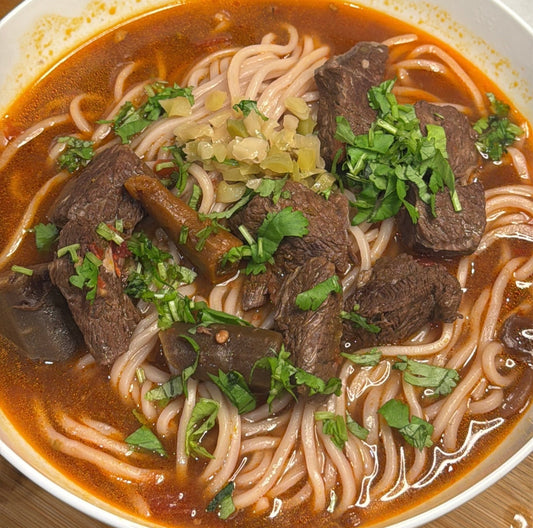
Let’s cut to the conclusion, if you’ve never had beef noodles these are so good your entire street will come running to your house. With a TCM twist, we keep the Taiwanese non-spicy and slightly sweet flavour but channel our heritage from Sichuan to boost the umami of the broth and beef with some hearty herbs.
Strap in because this recipe needs a few ingredients but they go into one stock pot / instant pressure cooker and will last a few days in the fridge. Easily doubled and scaled to larger portions for bigger crowds or batch weekend cooking.
Ingredients
- Beef 500g-1kg (choose your size to feed 4-6 people) - cut into bite size 4cm blocks
- Preferrably brisket + sirloin or chuck roast if buying from Woolies
- Needs a bit of fat and tendons, pure lean steak won’t survive the roast and the stew won’t come out as well.
- Carrots x 2 - peeled and cut same size as beef or slightly larger is OK
- I used purple carrots because I found some awesome organic ones. Orange is great.
- Advise to not use Daikon for this recipe because we used TCM herbs and Daikon is a herb reducer.
- Tomato x 1 - truss is preferred, ripe and more squishy is best
- Blanched with boiling water to remove skin and diced
- Ginger 5cm knob - sliced into 0.3cm thick slices
- Garlic 3 cloves - sliced same as ginger not too thin
- Spring onion 2-3 stalks - whites sliced same as ginger not too thin
- Keep greens sliced for topping
- Sichuan bean paste (Dou Ban Jiang) 1/2 cup
- Highly recommend to buy 郫县豆瓣 Pi Xian Dou Ban which is the authentic Sichuan version
- It looks red and spicy but it’s not at all. The red adds vibrancy to the dish and fermented bean is great for digestive health in general.
- Stock 1L - the soup base, so use a good stock if you have it otherwise I’ve found Matt Moran’s Beef Bone Broth pretty good. Make sure it’s reduced salt.
- Soy sauce 1/4 cup or to taste
- Herbs and spices
- A good handful of Sichuan Pepper - whole sized not powder. Depends on your preference but really advise to use it for the
- Star Anise x 1
- Bayleaf x 2
- TCM herbs:
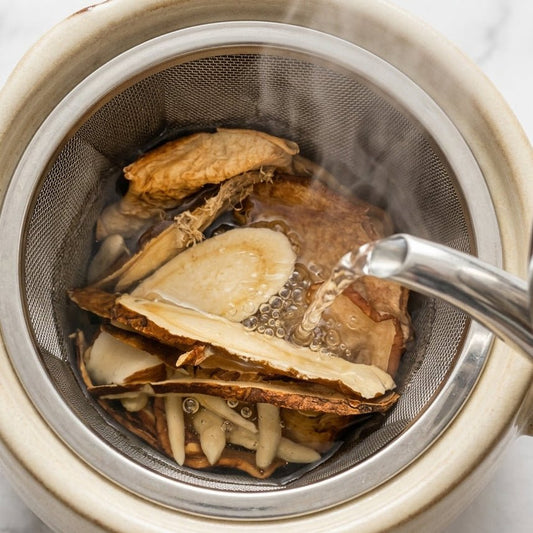
- Bai Zhi 白芷 1-2 slices - like cinnamon but more sweet, very umami
- Licorice Root 甘草 1-2 slices - naturally earthy and sweet
- Chinese Cinnamon Bark 肉桂 1 piece - cinnamon flavoured but a much tougher bark that lasts in stews, great for meat dishes
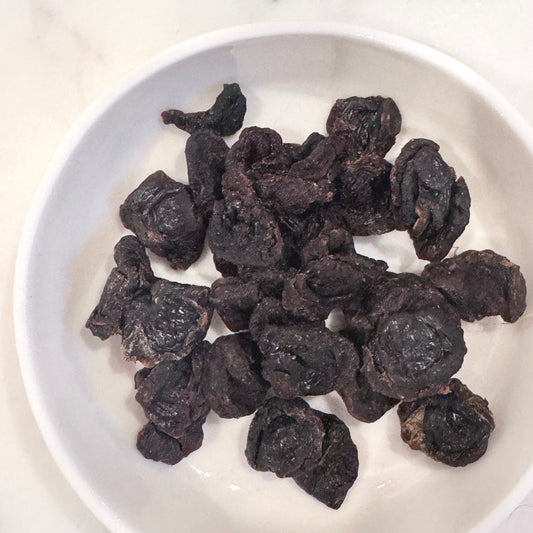
- Longan 龙眼肉 20g - dried sweet fruit used for brown sugar substitution
- Fresh wheat noodles
- If you can’t find any, the thicker egg noodles are ok but will have a completely different texture
- This dish works well with a thicker noodle
- Neutral oil for cooking
- Coarse salt and ground pepper for flavouring
- Shaoxin Wine (optional) 1/4 cup - replace with more stock if not using, for deglazing
- Optional toppings for serving:
- Coriander leaves - finely slithered
- Sichuan pickled mustard greens (Zha Cai) - finely diced
- If you can find this in the Asian grocery store, try to buy the Yu Quan 鱼泉 brand
- Tea egg

Instructions
- Boil water in a stock pot with half the ginger and a good handful of salt. Add the beef once the water is boiling and keep on high for 10 minutes. Brown puff matter should float up - this is the blood from the beef. Skim this continuously until the water appears clear. Strain pot of beef and keep aside. Leave the ginger in.
- In the pot that you will be cooking the stew in, put a drizzle of oil in and warm. Add Sichuan pepper, Star Anise on medium heat to toast for 2min or until fragrant. Do not burn the spices.
- Add to the pot, the remaining ginger, garlic and spring onion whites. Stir and cook until translucent / fragrant and the water from spring onions look reduced.
- Add the Dou Ban bean paste to the pan to fry with the aromatic mix for 3-5min. The whole time stirring to make sure it doesn’t burn. Sticking is OK as we will deglaze the pan either with Shaoxin wine if using or some stock.
- Add the blanched beef + ginger to the pot and stir through the bean paste and aromatics. Add carrots as well to stir through evenly. At this point include all the remaining herbs: bay leaf, cinnamon, Bai Zhi, Licorice Root and Longan. Fill with stock, add soy sauce if taste is not salty enough. If using an instant pot, set timer for 30minutes and put on high pressure. Once timer is up, let out the steam and turn off the power. Keep the lid on to continue cooking the stew with the remaining heat.
- (optional) If stewing in the stock pot, bring everything to a boil. Once boiling, lower the heat to low heat and keep simmering with the lid on for 1-2 hours. Check around the 1.5 hour mark to see if the beef is soft if not tender yet keep cooking until tender. Once soft, turn off heat and leave the lid on to continue cooking the stew with the remaining heat.
- For the noodles, boil a pot of water. Add noodles to the boiling water. Make sure the pot is big enough to cook the noodles portions so they don’t stick together. If required, cook the noodles in batches and avoid crowding the pot. Typically fresh noodles with require 2-4 minutes to get to al dente. Once al dente, drain the water and keep 1 cup of noodle water. Don’t over cook the noodles as we’ll finish cooking the noodles with servings of the beef stew.
- Open the instant pot lid or beef stew pot and add the drained noodles to the pot. If not eating the entire serving of beef in this sitting, do it the other way and ladle an appropriate amount of beef stew for the serving now into the noodle pot. Stir through the noodles and beef stew. There should be sufficient soup with the noodles to finish cooking the dish. If too thick, add the pasta water to a consistency you desire.
- Serve noodles and beef stew into large noodle bowls. Add coriander, mustard greens and egg if desired as toppings. Best eaten hot with the soup per noodle portion. If you’d like greens to go with the dish, some boiled bok choy or kale works perfectly.
For us, this recipe is a little taste of home, bringing together the Taiwanese beef noodle soup we love with the Sichuan flavours that are part of our family’s heritage. We enjoy exploring how traditional Chinese herbs and everyday ingredients can come together in the kitchen, adding depth, fragrance and a little something different to familiar dishes. We hope you enjoy making this recipe as much as we do, whether it’s a slow weekend cook or a big pot to share with family and friends. Share with us in the comments if you make it!

A bit more on the Herbs and Spices in this recipe
- Longan (龙眼肉): Naturally sweet, dried longan adds a gentle fruity sweetness to the broth, balancing the savoury beef and fermented bean paste. In TCM, longan is traditionally used to nourish the Heart and Spleen and support traditional concepts of blood nourishment.
- Bai Zhi (白芷, Angelica dahurica): Aromatic and slightly sweet, bai zhi adds depth and fragrance to slow-cooked meat dishes. In TCM, it is traditionally used in formulations for concerns such as nasal congestion and certain types of pain.
- Licorice Root (甘草): Adds a mild, earthy sweetness that rounds out the stronger flavours of the broth. Licorice root has a long history in TCM, where it is traditionally used to harmonise herbal formulations.
- Chinese Cinnamon Bark (肉桂): Warm, sweet and woody, cinnamon bark complements the richness of beef and creates a more rounded, aromatic broth. It is traditionally classified as a warming ingredient in TCM.